
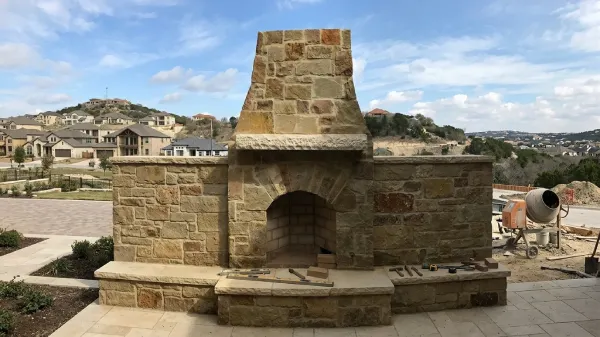
A patio sounds simple until you actually have to decide what it should look like, where it should go, and what you want it to do. Then the questions start piling up. How much space is enough? Should it connect directly to the house? Would a dining area make more sense than another seating area? What kind of stone will still look right several years from now? These are not small details, because a patio becomes part of the way a property is used. We have found that the most successful outdoor spaces usually begin with something much less complicated than a design trend. They begin with how the homeowners live and what they want the backyard to become.
Step 1: Pay Attention to How You Actually Use Your Backyard
Before choosing a shape or material, spend some time thinking about a normal week at home. Not the idealized version with a magazine-perfect outdoor dinner every Saturday, but the ordinary one. Maybe you drink coffee outside in the morning. Maybe family gatherings tend to spill outdoors whenever the weather cooperates. Perhaps you want somewhere comfortable to sit while dinner is being prepared, or a larger area where guests can move around without feeling crowded. Those habits give us useful information. A patio meant primarily for two or three people does not need the same footprint as one designed around frequent entertaining. We start there because good design should serve real life, not force real life to fit a drawing.
Step 2: Study the Property Before Settling on a Layout
The open patch of lawn where you imagine a patio is only one part of the equation. Look at the house, existing trees, planting beds, walkways, fences, pools, slopes, and the way water moves across the property after rain. Even a beautiful design can feel wrong if it ignores what is already there. We pay close attention to these relationships because the patio should feel connected to the home and landscape. Sometimes that means extending the lines of the house. Sometimes it means creating a softer transition into the yard. Grading and drainage matter too. They are not particularly glamorous parts of patio planning, but they are exactly the sort of practical details that can make a finished project work well for years.
Step 3: Choose a Shape That Makes Sense for Your Space
There is a temptation to start with a shape you have seen somewhere else. A large rectangle looks clean in photographs, while curved patios can have a relaxed, organic quality. Neither is automatically the better choice. The shape needs to make sense for the property. Consider where furniture will sit, where people will walk, where doors open, and whether the patio needs to accommodate a grill, dining table, lounge area, or other features. We often find that the best layouts are not the ones with the most complicated outlines. They are the ones where everything seems to have found its natural place, with enough room to move without leaving large areas that serve no real purpose.
Step 4: Select Materials With More Than Color in Mind
Choosing patio material can be surprisingly personal. People notice color first, but texture, scale, pattern, and the relationship between materials can matter just as much. A stone that looks wonderful on a small sample may feel very different across a large patio. The exterior of the house matters, too. So do nearby walls, paths, landscaping, and other masonry features. When homeowners begin researching patio services in Cedar Valley, TX, we encourage them to think about the entire property rather than treating the patio as a separate project. We can help narrow down materials that make sense visually and practically, but the final choice should still feel like something that belongs to your home.
Step 5: Decide Which Features Are Worth Building In
This is where a patio can become much more than a place to put a few chairs. An outdoor kitchen can make entertaining easier because the person cooking does not have to disappear inside. A fire feature can give the space a reason to be used after sunset. Built-in seating can define the patio without filling it with movable furniture. Poolside masonry, connecting walkways, and carefully placed stone details can also bring separate areas of the property together. Before construction begins, we like to consider possibilities such as:
- Outdoor kitchens for cooking and entertaining
- Fire features for evening gatherings
- Built-in seating for a more permanent layout
- Walkways connecting the patio with other outdoor areas
- Pool masonry that ties the surrounding space together
- Decorative stonework that adds texture and character
The important part is restraint. More features do not necessarily make a better patio. Every addition should have a reason to be there.
Step 6: Think About How People Will Move Through the Space
One of the easiest things to overlook on a patio plan is movement. A space can have beautiful stonework and plenty of furniture, yet still feel awkward if everyone has to squeeze around a table to reach the door. Think about the routes people will naturally take. Where will someone walk when carrying food from the kitchen? How will guests move toward the pool or garden? Can several people pass through comfortably? We consider these questions early because circulation is something homeowners notice every time they use the patio, even if they never consciously identify it as a design feature. When movement feels effortless, the space simply feels better.
Step 7: Leave Room for the Way Your Needs May Change
Outdoor projects tend to have a longer life than the plans we make for them. A family may grow. Entertaining habits may change. A homeowner who rarely cooks outside today may decide a few years from now that an outdoor kitchen would be useful. That does not mean every patio needs to be designed around every possible future idea. It does mean we should avoid choices that unnecessarily limit what the space can become. Thinking ahead about utilities, circulation, available space, and possible additions can give you some flexibility without turning the current project into something oversized or complicated.
Step 8: Choose Professionals Who Understand the Whole Project
Custom masonry involves much more than placing attractive stone. The design needs to account for the property, materials, structure, drainage, proportions, access, and the way individual features work together. If you are comparing masonry contractors in Bee Cave, TX, look beyond a few finished photographs. Ask how the contractor approaches design, how site conditions are evaluated, what materials are recommended, and how the proposed work will connect with the existing property. We believe those conversations are important because homeowners deserve to understand what is being planned before construction begins. A thoughtful process usually produces a better result than rushing toward a finished surface.
Conclusion
The right patio design is rarely about finding one perfect picture and copying it. It is about paying attention to the property in front of you, then making a series of sensible decisions about use, layout, materials, features, and long-term function. That is the approach we bring to every project. At TEXAS STONE MASONS, we work with homeowners to create outdoor spaces that feel connected to the home and comfortable enough to become part of everyday life. If you are considering patio services in Cedar Valley, TX, contact us to talk through your property and ideas. A good patio starts with a good conversation, and we are ready to help you figure out what makes sense for your space.
FAQs
1. How do I choose the right patio design for my Cedar Valley property?
Consider how you use the space, your home’s layout, existing landscape, available area, and the features you want to include.
2. What patio materials work well with an existing home design?
Choose materials that complement your home’s exterior, landscaping, walkways, and other masonry features for a cohesive look.
3. Should I include an outdoor kitchen or fire feature in my patio design?
If you regularly entertain or spend evenings outdoors, these features can make the patio more functional and enjoyable.
4. Why are drainage and grading important when planning a patio?
Proper drainage and grading help manage water around the patio and support the long-term performance of the finished space.
5. What should I ask before choosing a masonry contractor?
Ask about their design process, material recommendations, site evaluation, previous projects, and how they approach custom masonry work.