
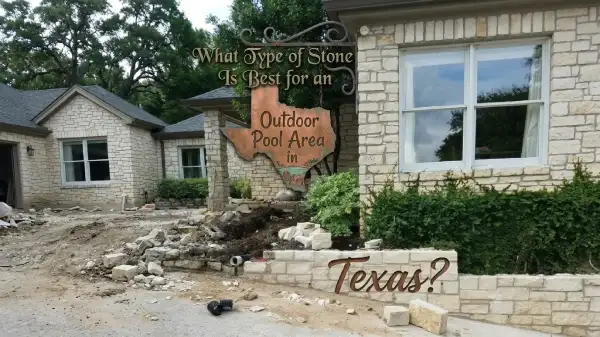
A pool can look beautiful in a stone sample and still be the wrong choice once it is installed outside. Texas sun, summer heat, standing water, wet feet, and years of outdoor exposure, all change how a material performs. That is why we look beyond color and appearance when choosing stone for a pool area. The right material needs to suit the setting, feel comfortable underfoot, handle moisture, and hold up to the conditions it will face every day. It should also make sense alongside the home’s architecture and the rest of the landscape.
Why Stone Selection Matters Around a Pool
Pool areas are harder on masonry than many people realize. The stone may spend hours in direct sun, get wet repeatedly, and deal with constant foot traffic during the warmer months. Texture matters because a surface that looks smooth and elegant when dry can feel very different when wet. Color matters, too. Darker materials tend to absorb more solar heat, which can make bare feet uncomfortable on a hot afternoon. We consider these details before installation because replacing an unsuitable surface later is far more disruptive than getting the material choice right at the beginning.
Which Stones Work Well in Texas?
Several natural stones can perform well around a pool when they are properly selected and installed. Travertine is a familiar choice because its lighter colors and naturally varied surface suit many outdoor pool designs. Limestone has a quieter, more consistent appearance and works particularly well when a homeowner wants the masonry to feel integrated with the architecture. Flagstone brings a more irregular, organic character, with individual pieces creating a less uniform pattern. Sandstone offers another option where color variation and texture are important. The specific variety, finish, thickness, and installation location all matter, so simply choosing a stone by name does not tell the whole story.
What About Pool Coping?
The stone along the pool edge deserves special attention. Coping is touched constantly, exposed to water, and often sits where swimmers enter and leave the pool. Its shape and finish affect both appearance and comfort. Sharp edges, an unsuitable surface texture, or poorly considered proportions can become noticeable very quickly. We prefer to treat coping as part of the larger design rather than an afterthought. When the coping, pool deck, steps, walls, and surrounding patio relate to one another, the entire area feels more deliberate
How Does Texas Heat Affect Stone?
A Texas pool surface has to live through serious heat. Sun exposure can make some materials extremely warm, particularly darker stones and surfaces with high solar absorption. That does not automatically rule out darker stone, but it does mean the location and intended use deserve consideration. We also look at how the surface will respond to moisture, cleaning, and normal outdoor wear. Homeowners researching stonework contractors in Kyle, TX should ask about these practical factors instead of focusing only on which stone looks best in a showroom or photograph.
What Should You Check Before Choosing?
The best stone depends on the specific pool, property, design, and expectations for maintenance. Before making a final selection, consider: Is the area shaded for part of the day or exposed to full sun? Will children be running across it? Is the stone intended for the pool edge, a walking surface, a wall, or a covered patio? Those questions can change the recommendation. It is also worth considering:
- The amount of direct sunlight
- Surface texture when wet
- Expected foot traffic
- Cleaning and sealing requirements
- Compatibility with the home’s exterior
- The color and character of nearby materials
Looking at completed installations can be especially useful because a small sample rarely shows how natural variation will look across an entire pool deck.
Does One Stone Need to Cover the Whole Area?
Not at all. In fact, using complementary materials can make an outdoor space more interesting without making it feel busy. Pool coping has different functional demands from a retaining wall, and a walkway does not necessarily need the same treatment as a covered seating area. We often find that the strongest designs use materials that relate to one another without making every surface identical. A consistent color family, similar texture, or carefully matched stone can create continuity while still giving each part of the outdoor space its own purpose. That approach can be especially effective for Pool Masonry in Canyon Lake, TX, where natural surroundings often lend themselves to varied stonework.
Why Installation Matters as Much as the Stone
Even a good material can perform poorly when the underlying work is not handled correctly. Base preparation, drainage, setting methods, joints, slope, edge details, and finishing all have a bearing on how a pool surface performs over time. The stone also needs to be appropriate for the particular application. A material that works beautifully as a wall veneer may not be the right choice for a frequently wet walking surface. When we evaluate a project, we consider the stone and the construction method together rather than treating material selection as a separate decision.
Choose Stone With the Whole Property in Mind
At TEXAS STONE MASONS, we look at the pool as part of the property rather than an isolated feature. The surrounding walls, patio, landscaping, architecture, and existing masonry all influence which stone will feel right. There is no universal winner, and that is actually useful because it leaves room for a design that suits the property instead of forcing every project into the same material. For homeowners comparing stonework contractors in Kyle, TX, a detailed conversation about the site’s conditions and the intended use can reveal much more than a list of available stone types.
Conclusion
The best stone for a Texas pool area is the one that balances appearance with heat, moisture, traction, maintenance, and the way the space will actually be used. Travertine, limestone, flagstone, sandstone, and other natural stones can all have a place in outdoor masonry when the material and finish are matched to the application. If you are building a new pool area or remodeling an existing one, contact us to discuss the site, your design goals, and the stone selections that make practical sense for your property.
FAQs
1. What type of stone is best for a Texas pool area?
Travertine, limestone, flagstone, and sandstone can all work well when properly selected for the pool area’s conditions and intended use.
2. Is travertine a good choice for pool areas?
Travertine is a popular pool material because its lighter colors and naturally textured surface suit many outdoor pool settings.
3. Does Texas heat affect pool stone?
Yes, direct Texas sunlight can make some stones significantly hotter, so color, location, and surface characteristics should be considered.
4. Should pool coping match the pool deck?
Pool coping does not have to match the deck exactly, but complementary colors, textures, and materials can create a more cohesive design.
5. Why does professional stone installation matter?
Proper preparation, drainage, setting methods, joints, slopes, and finishing all contribute to the long-term performance of pool masonry.